How Much Energy Does a Solar Panel Actually Produce?

How Much Energy Does a Solar Panel Actually Produce?

How Much Energy Does a Solar Panel Actually Produce?

February 20, 2026

Never ever think of giving up. Winners never quit and quitters never win. Take all negative words out of your mental dictionary and focus on the solutions with utmost conviction and patience. The battle is never lost until you’ve abandon your vision.

How Much Energy Does a Solar Panel Actually Produce?

Switching to solar is one of the smartest investments a homeowner can make today. But before you install those sleek blue or black panels on your roof, the most common question is: “How much electricity will I actually get?”

Understanding solar output helps you calculate your savings and ensures you install a system that truly meets your family’s needs.

The Quick Answer: Solar Energy Metrics

On average, a single residential solar panel produces between 250 and 400 watts of power per hour. However, since the sun isn’t at its peak all day, we look at daily production:

  • Daily Output: A single panel typically generates 1 to 2 kWh (units) of energy per day.
  • System Capacity: Most Indian homes opt for a system between 1 kW and 5 kW.
  • The Tamil Nadu Advantage: In sunny regions like Tamil Nadu, a 1 kW system is highly efficient, generating roughly 4 units per day and up to 1,600 units annually.

How to Calculate Your Potential Savings

You don’t need to be an engineer to estimate your solar generation. Here is a simplified way to look at the math:

  1. System Size: Take your total system capacity (e.g., 4 kW).
  2. Peak Sun Hours: Multiply it by the average sun hours in your area (usually 4 to 5 hours in India).
  3. Efficiency Factor: Account for energy loss (inverters, wiring, etc.) by multiplying by 0.8.

Example: A 4 kW system x 4.5 hours x 0.8 = 14.4 units per day.


Key Factors That Influence Your Panel’s Performance

Not all rooftops are created equal. To get the “maximum juice” out of your investment, consider these variables:

1. Panel Material (Quality Matters)

  • Monocrystalline: The “Premium” choice. Made from high-grade silicon, these are highly efficient and perform better in low-light conditions.
  • Polycrystalline: The “Budget-Friendly” choice. Great for large spaces, though they require slightly more roof area for the same output.

2. Placement and Tilt

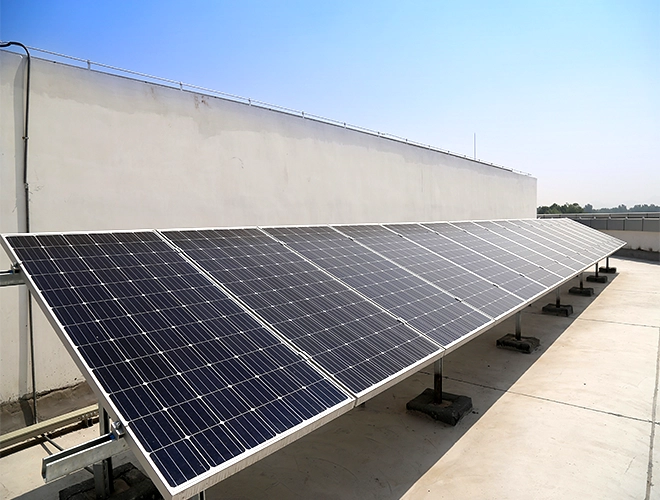
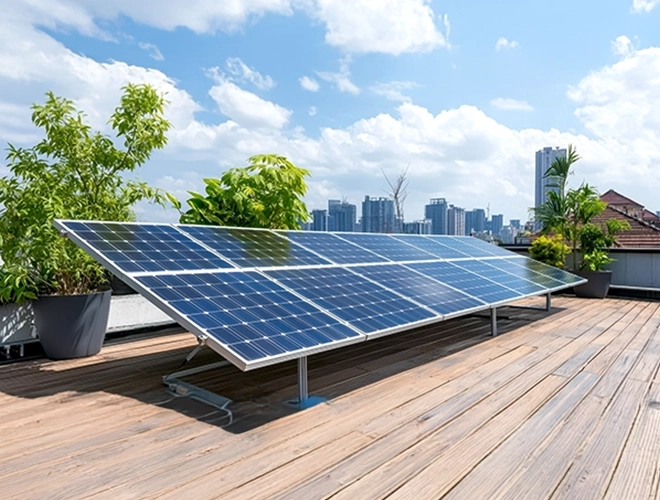
For homes in the Northern Hemisphere (like India), panels should ideally face South. The angle of the tilt should be adjusted to capture the most direct sunlight. Even a small shadow from a nearby tree or chimney can significantly drop your production.

3. Maintenance and Dust

In dusty environments, a thin layer of grime can block sunlight. Regular cleaning—usually just a simple water rinse—can keep your efficiency at 100%.


Why Partner With Us?

While the math is simple, the installation is an art. We don’t just “bolt panels to your roof.” We provide:

  • Shadow Analysis: We map your roof to avoid obstacles and maximize sun exposure.
  • Quality Components: Using high-efficiency panels and top-tier inverters to minimize energy loss.
  • End-to-End Support: From government subsidy paperwork to net-metering integration with the electricity board.


Ready to see your EB bill hit zero?

The best way to start is with a professional site assessment.


Frequently Asked Questions (FAQ)


1. Will solar panels work during the monsoon or on cloudy days?

Yes! Solar panels don’t need direct “heat”; they need light. Even on a cloudy day in Tamil Nadu, high-quality panels can still produce about 25–30% of their usual capacity. While production drops during heavy rain, the rain actually helps by naturally washing away dust, which improves efficiency once the sun comes out.

2. How much roof space do I need for a 3kW system?

A typical 1kW system requires about 100–120 sq. ft. of shadow-free area. So, for a 3kW system, you would need approximately 300–350 sq. ft. We always ensure there is extra space left for walking and maintenance cleaning.

3. What is “Net Metering” and how does it lower my bill?

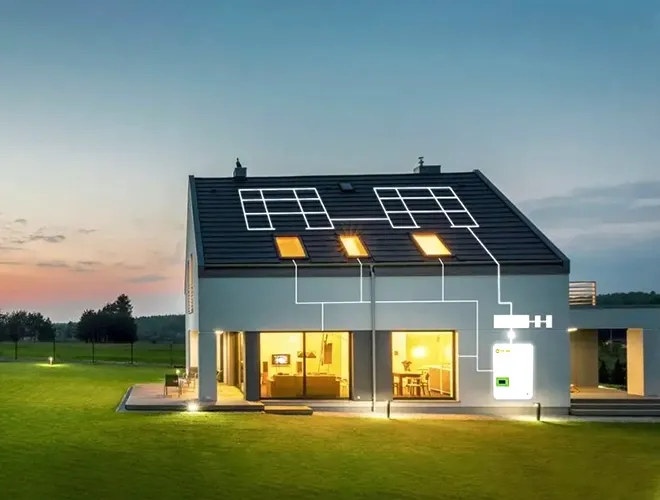
Net Metering is a system where your solar plant is connected to the TANGEDCO (EB) grid.

  • Daytime: Your panels produce energy. If you use less than you produce, the “extra” goes to the grid.
  • Nighttime: You pull energy from the grid.
  • The Bill: At the end of the month, you only pay for the “Net” difference. If you exported more than you imported, your bill can literally be just the minimum fixed charges!

4. Can I run my AC and Refrigerator on solar?

Absolutely. A well-designed 3kW or 5kW system can easily power heavy appliances like Air Conditioners, refrigerators, and washing machines. Since ACs are mostly used during the hot afternoons when solar production is at its peak, they are the perfect match for a solar rooftop system.

5. What is the average “Payback Period” for a home solar system?

For most residential setups in India, the system pays for itself in 4 to 5 years through electricity bill savings. Since solar panels have a lifespan of 25 years, you essentially enjoy 20 years of free electricity.

6. Do I need to clean the panels every day?

No. In most parts of Tamil Nadu, a simple water wash once every two weeks is enough to keep the dust off. If your house is near a main road or a construction site, you might need to clean them once a week to ensure maximum sunlight absorption.

7. Is there a government subsidy available in Tamil Nadu?

Yes! Under the PM-Surya Ghar: Muft Bijli Yojana, residential households can avail of significant subsidies. For example, a 3kW system currently attracts a subsidy of approximately ₹78,000, making the initial investment much more affordable.
 

Recent Posts

More Than Savings: How Solar is Cleaning India’s Future

February 26, 2026

solar-energy-saving

How Much Energy Does a Solar Panel Actually Produce?

February 20, 2026

The Homeowner’s Guide to Solar Net Metering: How to Actually Reach 90% Savings

January 29, 2026

Solar Panel Installers in Tamil Nadu | Asian Power Tech

The Ultimate Homeowner’s Guide to Rooftop Solar in 2026

January 24, 2026

Solar Panel Installers in Tamil Nadu | Asian Power Tech

Solar Panel Price in Tamil Nadu (2025): The Real Cost vs. Subsidy Guide

December 29, 2025

Top 10 solar company

Top 10 Best Solar Companies in Tamil Nadu

December 26, 2025

Rooftop solar Mistakes

7 Mistakes to Avoid: An Insider's Guide to Buying Rooftop Solar in Tamil Nadu

October 24, 2025

Solar Subsidy

Solar Subsidy in Tamil Nadu: Save Big with PM Surya Ghar Muft Bijli Yojana

October 7, 2025

Power outages

Can Solar Panels Work in a Power Outage

September 23, 2025

Solar with AC

Reduce Your AC Bill with Rooftop Solar in Tamil Nadu

September 6, 2025

Ready to Switch to Solar

Let’s power your future together.