Are you tired of rising electricity bills? Or perhaps you live in an area where power outages are a daily frustration? If you’re looking for true energy independence, an Off-Grid Solar System might be the smartest investment you’ll ever make.
In this guide, we’ll break down exactly how off-grid solar works, what it costs, and whether it’s the right choice for your home in 2026.
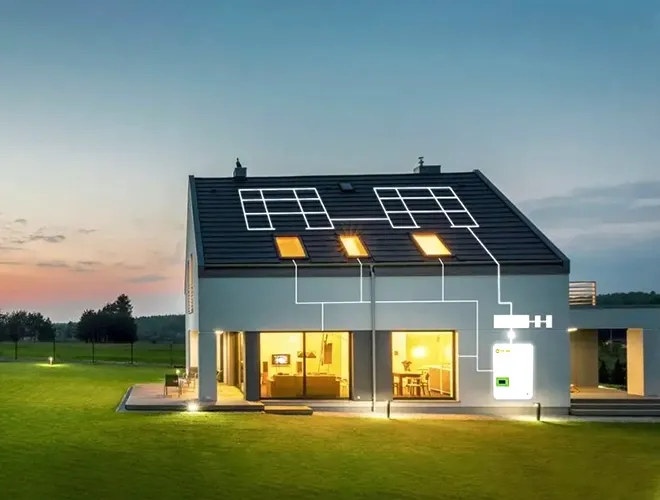
Unlike a standard solar setup that stays connected to the government power lines (On-Grid), an Off-Grid System is a standalone powerhouse. It generates electricity from the sun and stores the excess in batteries.
The result? You become your own power company. Even if the entire city goes dark, your lights stay on.
The Essential Components
To go completely off-the-grid, you need four main pieces of hardware:
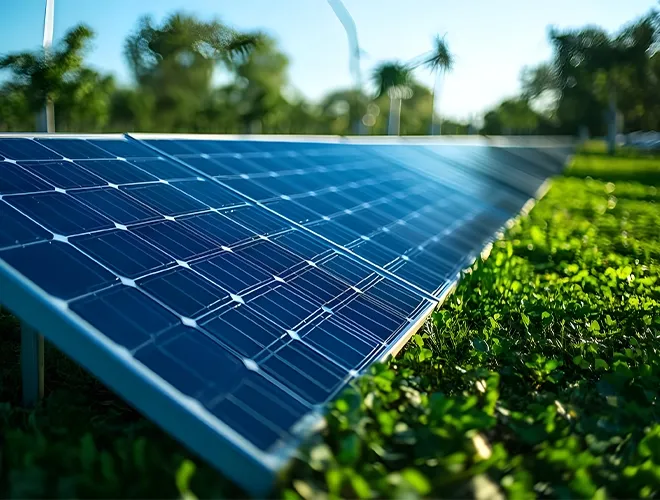
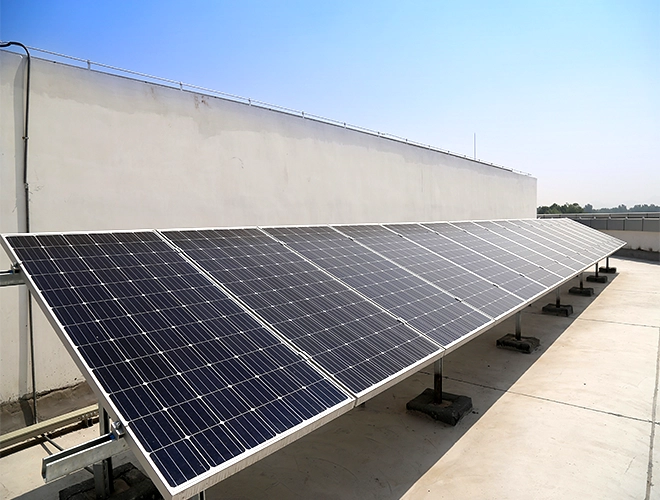
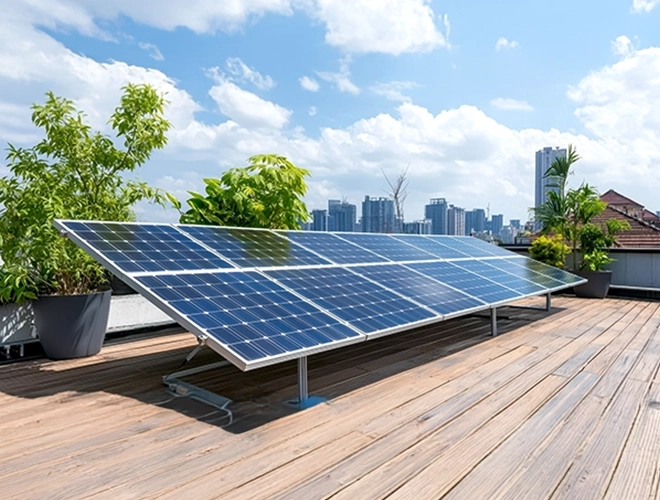
Solar Panels: These capture sunlight and turn it into DC electricity.
Solar Inverter: This converts the DC power into AC power (which your fridge, TV, and lights use).
Solar Batteries: This is the “heart” of the system. They store energy during the day so you have power at night.
Charge Controller: This acts as a protector, ensuring your batteries don’t overcharge or get damaged.
Zero Electricity Bills: Since you aren’t pulling power from the grid, the utility company can’t charge you a cent.
Total Independence: Ideal for remote cabins, farmhouses, or areas with unstable power grids.
Eco-Friendly Living: You are reducing your carbon footprint by using 100% clean, renewable energy.
Reliability: No more worrying about maintenance blackouts or storm-related power failures.
The Trade-offs (The Cons)
Higher Initial Cost: Because you have to buy batteries, the upfront price is higher than a grid-tied system.
Battery Maintenance: Batteries have a lifespan (usually 5–15 years depending on the type) and will eventually need replacement.
Yes, absolutely! However, ACs consume a lot of power. To run a 1.5-ton 5-star inverter AC, you typically need at least a 5kW off-grid system with a strong lithium battery bank to handle the high starting load and night-time usage.
This depends on your “backup hours.” For a typical 2-3 BHK home, a 2kW or 3kW system usually requires 2 to 4 tall tubular batteries (Lead-Acid) or a single 5kWh Lithium-ion battery pack to last through the night.
Lead-Acid: Cheaper upfront but lasts only 3–5 years and requires water topping.
Lithium-ion: More expensive but lasts 10–12 years, charges faster, is maintenance-free, and takes up much less space. In 2026, Lithium is the preferred choice for long-term savings.
In India, major schemes like PM Surya Ghar Muft Bijli Yojana primarily focus on On-Grid systems. However, for remote or rural areas where the grid doesn’t reach, there are specific central and state-level grants available under the PM-KUSUM scheme for solar pumps and standalone systems.
Most modern monocrystalline panels come with a performance warranty of 25 to 30 years. Even after 25 years, they usually still produce about 80% of their original power capacity.
Solar panels still produce electricity during cloudy days, though at a reduced rate (about 10%–25% of their capacity). This is why a well-sized battery bank is crucial it carries you through those low-sunlight days using energy stored when it was sunny.

Let’s power your future together.

Asian Power Tech is a TNEB-licensed solar and electrical solution company based in Salem, Tamil Nadu
206, Ambalavanaswamy Koil Street, Gugai,
Salem – 636006,
Tamil Nadu, India
© 2025 Asian Power Tech. All Rights Reserved.