Are you tired of watching your electricity bills climb every month? With rising energy costs and a growing need for sustainable living, many homeowners are turning to the sun for relief. If you are looking for the most cost-effective way to go solar, an On-Grid Solar System is likely your best bet.
In this guide, we’ll break down exactly how it works, why it’s a favorite for residential use, and how it can practically pay for itself.
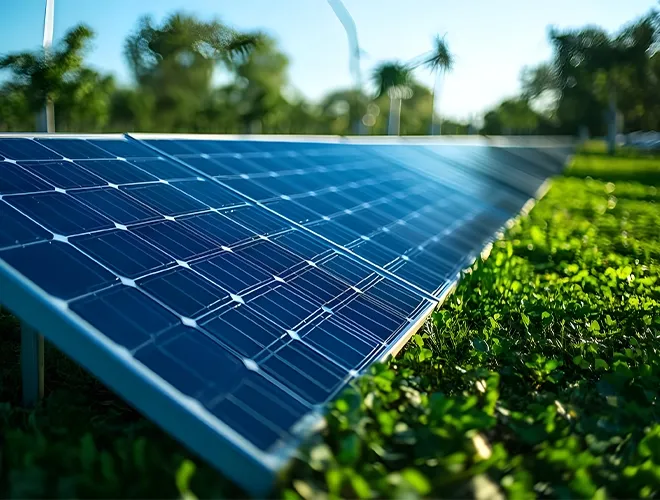
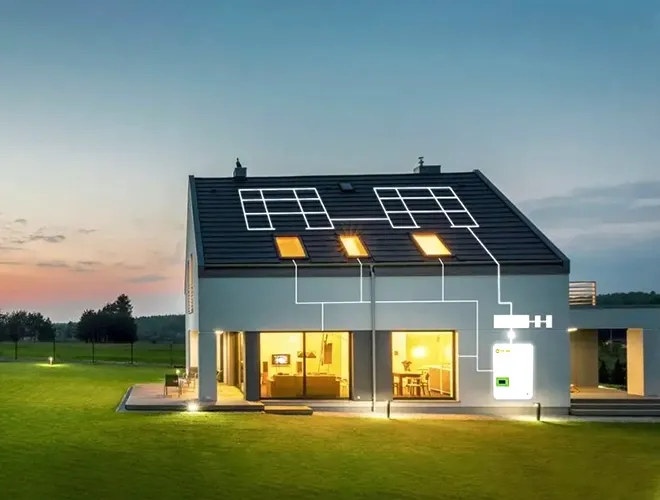
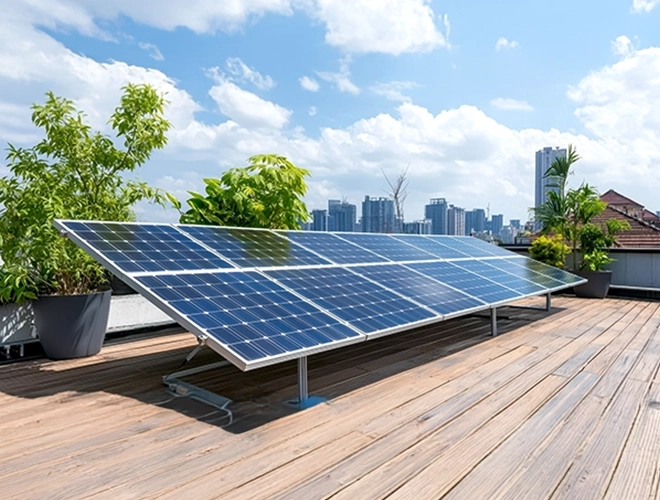
An On-Grid (or Grid-Tied) solar system is a solar power setup that is connected directly to your local government’s electricity grid. Unlike off-grid systems, this setup does not require expensive batteries. It works in tandem with your utility provider to ensure you always have power, whether the sun is shining or not.
By generating your own power during the day, you can reduce your monthly EB bills by up to 80% to 90%. In many cases, if your production is high enough, your bill could even hit the minimum fixed charge.
Since there are no batteries involved, you don’t have to worry about expensive replacements every 5 years. Maintenance is as simple as cleaning the dust off your panels once every few weeks.
Most governments offer attractive subsidies (like the PM-Surya Ghar Scheme in India) to encourage homeowners to install on-grid systems. This significantly reduces your initial setup cost.
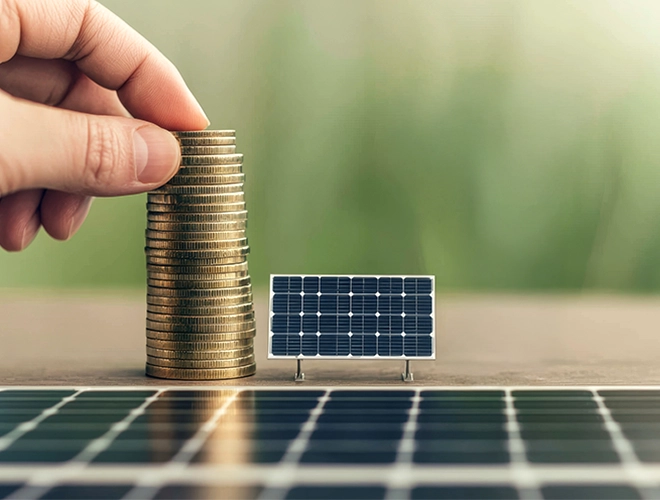
An average on-grid system pays for itself within 4 to 5 years through bill savings. Since solar panels have a lifespan of 25 years, you essentially get 20 years of free electricity.
Pro Tip: Keep in mind that for safety reasons, an on-grid system will shut down during a power outage (to prevent back-feeding the grid while workers are fixing lines). If you have frequent power cuts, you might want to consider a Hybrid System.
Switching to an On-Grid solar system is one of the smartest financial and environmental decisions a homeowner can make today. You aren’t just saving money; you’re contributing to a cleaner, greener planet.
No. For safety reasons, on-grid systems have an “anti-islanding” feature. This means the system shuts down during a power outage to prevent sending electricity back into the lines while technicians might be working on them. If you need backup during power cuts, a Hybrid System with a battery is a better choice.
On average, a 1kW solar system requires approximately 70 to 100 square feet of shadow-free area. Most residential homes install between 3kW to 5kW, which would require 300 to 500 square feet of terrace space.
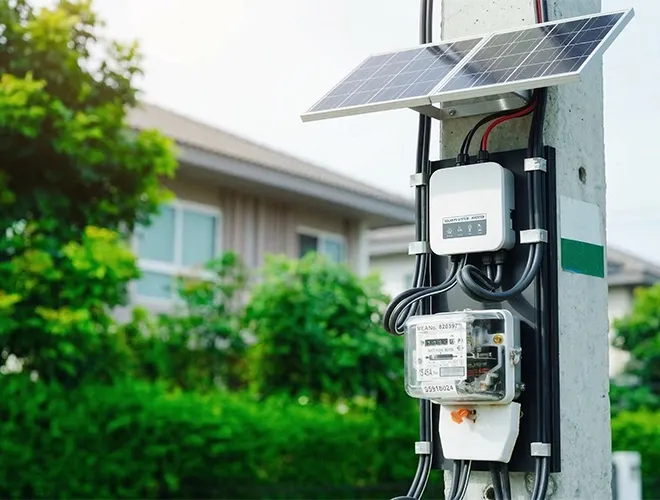
Yes, you will still receive a bill, but the amount will be significantly lower. Your bill will show the “Net” units (Total units consumed from the grid minus the units your solar sent to the grid). You may only have to pay a small fixed monthly connection charge.
Absolutely! Since the system is connected to the grid, your appliances draw power from both the solar panels and the grid simultaneously. The solar power offsets the consumption, making it much cheaper to run heavy loads during the day.
Most high-quality solar panels come with a performance warranty of 25 years. The inverter typically lasts between 10 to 15 years. This makes solar one of the most durable and long-lasting investments for your home.
Yes! In many regions, including India (under the PM-Surya Ghar Scheme), the government provides a direct subsidy to residential homeowners to reduce the initial cost of installation. The amount varies based on the capacity (kW) you install.
Let’s power your future together.

Asian Power Tech is a TNEB-licensed solar and electrical solution company based in Salem, Tamil Nadu
206, Ambalavanaswamy Koil Street, Gugai,
Salem – 636006,
Tamil Nadu, India
© 2025 Asian Power Tech. All Rights Reserved.